
How Arrest Warrants Work in Presque Isle County
Michigan courts do not hand out arrest warrants on request. The law demands a sworn complaint plus a probable-cause finding first, and MCL 764.1a states that rule outright. MCR 6.102 then governs the choice between two tools: a summons, which simply tells the person to come to court, or an arrest warrant, which empowers an officer to take that person into custody. Presque Isle County follows the same path as every other county. Here the 89th District Court issues felony complaints, sets bond, and runs preliminary hearings, while the 53rd Circuit Court takes felony cases once a bindover moves them up. Misdemeanor warrants stay in district court from complaint to disposition.
Presque Isle County Warrant Probable Cause
The felony warrant form itself shows the probable-cause finding. Its first block carries the judicial district and circuit, both case numbers, the court address and phone, and agency identifiers. The next blocks name the complainant or complaining witness, the defendant, any codefendant, and the People of the State of Michigan. Further down, the incident block records the date, the city, township, or village, the county, the police report number, the charge, and the maximum penalty. A probable-cause section then recites the sworn complaint and the court's finding, with checkboxes marking each reason a warrant was chosen over a summons. The command section closes it out, directing an authorized officer to arrest the person and bring them before the court. Reading a Presque Isle County warrant from top to bottom tells you who asked for it, what charge sits behind it, and which court issued it.
Arrest Warrants: What They Contain
The blank official form shows the field groups a reader can ask about.
| Case identifiers | District and circuit case numbers, plus the police report number. |
|---|---|
| Form | MC 200w for a felony arrest warrant. |
| Named subject | Name, date of birth, license number, and physical descriptors. |
| Charge and penalty | The offense text, the statute, and the stated maximum penalty. |
| Issuing authority | The judge or magistrate who signed, with the date and court. |
| Bond and return | Release conditions set by the court, plus the officer's return. |
Who Applies for a Presque Isle County Warrant
A law-enforcement agency drafts the complaint and the prosecutor's office presents it. The Presque Isle County Prosecuting Attorney runs the county's criminal cases, while the Sheriff's Office, Rogers City Police, and Michigan State Police investigate and later serve process. A magistrate in district court reviews the complaint, and a judge signs the paperwork. After a felony bindover, the circuit court becomes the issuing court. That shift is why one felony question in Presque Isle County can mean calling two different courts.
Presque Isle County Prosecuting Attorney
151 E. Huron Avenue
Rogers City, MI 49779
Rogers City Police Department
193 E. Michigan Avenue
Rogers City, MI 49779
989-734-2330
How Warrants Get Served in Presque Isle County
Not just anyone can serve a warrant. MCR 6.102 limits execution to a peace officer or another person authorized by law. In practice the Sheriff's Office handles service countywide and runs the jail, Rogers City Police can execute warrants inside the city, and Michigan State Police or other authorized agencies may also serve process. The serving officer then returns the warrant to the court with the outcome noted. Service can come at a residence, on the road, or when a person shows up somewhere on unrelated business. After an arrest comes booking, then arraignment without unnecessary delay, where the court explains the charge, the right to counsel, and release conditions. The 89th District Court sets and accepts bond in its jurisdiction, so a Presque Isle County warrant question about release goes there first.
Presque Isle County Arrest Warrant Process
The arrest-warrant sequence runs in a fixed order. A complaint identifies the alleged offense and the accused. Next, a magistrate or judge reviews the probable-cause basis. The court then chooses a summons or an arrest warrant, and the form records which reasons supported that choice. An officer executes or attempts service and returns the process to the court. If the person is arrested, arraignment and release conditions follow. Felony cases take one more turn: the district court holds a preliminary examination and decides whether to bind the case over to the circuit court. Each step changes which office you should call in Presque Isle County, so the case number and the court name matter more than the label on the warrant.
Arrest Warrants, Summonses, and Bench Warrants
These three instruments look alike on paper. A summons keeps you out of custody at the start. A bench warrant grows out of an existing Presque Isle County case, often after a failure to appear. An arrest warrant follows a probable-cause finding on a fresh charge.
| Feature | Arrest Warrant | Summons | Bench Warrant |
|---|---|---|---|
| What it orders | An arrest | An appearance | An arrest for a missed obligation |
| Basis | Probable cause of an offense | A charge that does not need custody | Failure to appear or comply |
| Who issues it | Judge or magistrate | The court | The judge in the existing case |
| Response | Surrender, bond, or counsel | Appear on the date | Appearance or a motion to recall |
Presque Isle County Probation Warrant Requests
A probation officer can ask the court for a warrant when a technical or nontechnical violation is alleged. The request form names the court, the case, the agency, the current charge, and the defendant, then lists the alleged violations and the officer's declaration. A judge finds probable cause and sets either an immediate appearance or a bond. A probation warrant lives with the sentencing court and the probation file, not with a traffic clerk, and the judge sets the release conditions. Before arranging anything in Presque Isle County, ask the probation office or the sentencing court which file controls.
Federal Warrants and Presque Isle County
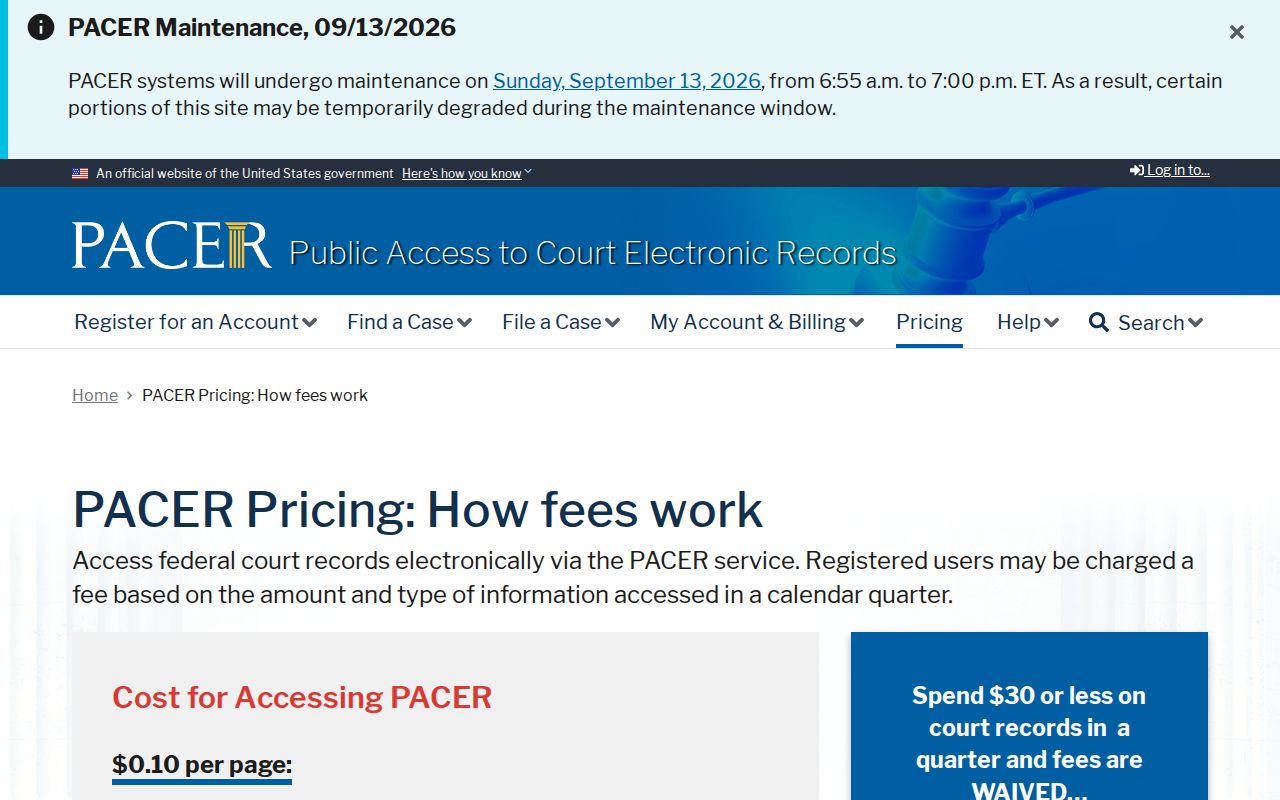
Presque Isle County sits in the Eastern District of Michigan. Federal arrest warrants come from a federal complaint, indictment, or magistrate's order, and no county court or Sheriff's Office page will search them. The U.S. Marshals Service handles federal fugitive work in the district, with a Bay City office and headquarters in Detroit. For dockets, the national PACER Case Locator is the tool. It updates usually each night and returns the party, court, case number, and filing dates. PACER charges a per-page fee, waived when quarterly usage stays at or below $30, as explained on the PACER pricing page.
Federal warrants stay sealed until served, so a search in Presque Isle County may show nothing. Take any federal case question to the federal court or your lawyer.
Presque Isle County Warrant Attorney Questions
A Presque Isle County warrant attorney can do real work here. Counsel reads the file, talks to the prosecutor, and sets an appearance that spares you a roadside stop.
- Is the warrant active, and which court issued it?
- Has a bond been set, and what type is it?
- Can the appearance be arranged through counsel rather than at the jail?
- Does a motion to recall, quash, or set aside apply to this file?
- What happens to the underlying charge after the appearance?
Note: Bond addresses custody and appearance, so posting it does not dismiss the charge or end the court case.
Handling an Arrest Warrant in Your Name
Start by confirming the warrant and its bond with the issuing court in Presque Isle County. Then, with counsel, weigh turning yourself in. Under MCR 6.105, an eligible warrant can mean arraignment within two hours when a judge is available, or a recall with a new date instead. If the court sends you to jail, phone the Sheriff's Office first.
Important: Speak with a lawyer before turning yourself in, because an active arrest warrant can lead to custody at any traffic stop or court visit.